
Dexterity Card
Every hand we ship, measured on one protocol, from October 2026.
A Dexterity Card is a record of how one physical robot hand, identified by its serial number and RC unit ID (RCSN), behaved on Robotics Center’s bench under one fixed protocol, the same for every brand. Each spec shows the manufacturer’s claim with its source beside RC’s measurement of that unit with the method and date; values RC has measured are labelled measured. As of no units have been measured, so every measured value is empty.
v0.1 · Draft for comment Comment on the draft
 Dexterity Card
Template · Protocol v0.1 (draft)
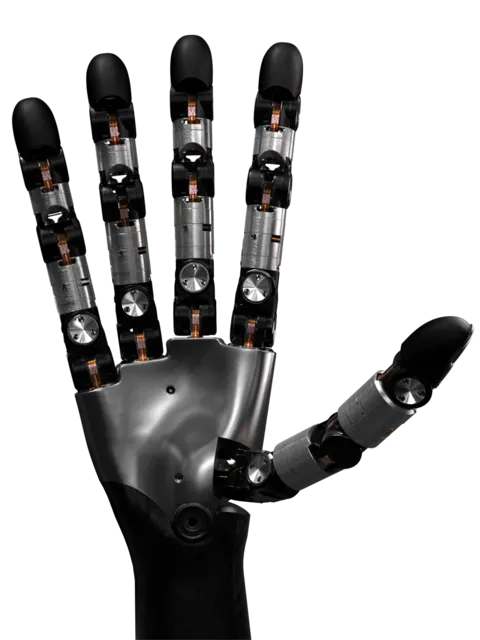 Example image
- Brand / model
- —
- Card type
- —
- Serial number
- —
- Measured on
- —
- RCSN
- —
- Protocol version
- v0.1 (draft)
- Fingertip repeatability—mm
- Command-to-motion latency—ms
- Per-joint backlash (max)—deg
- Max grip force—N
- Drift after 500 grasps—mm
- Thermal derating, 10 min—% of cold
Claimed vs measured
Each spec on the card has two columns: what the manufacturer claims, with its source, and what RC measured on this unit, with the method and date. We have measured no units yet, so every measured cell is empty.
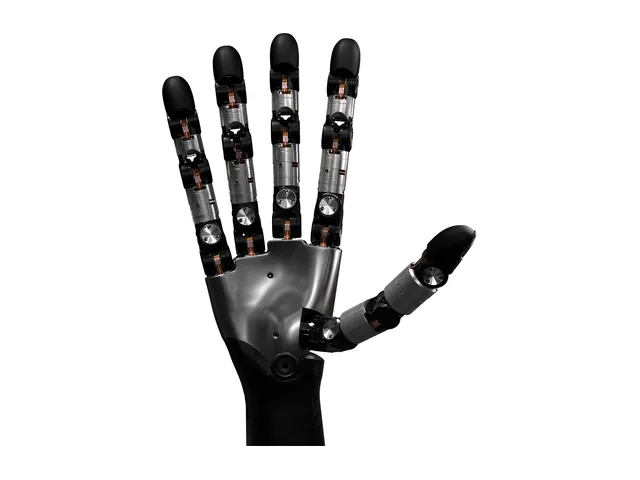
Wuji Dexterous Hand
Claimed: Manufacturer specifications, checked 2026-09-28. Original Wuji Hand; other generations differ.
Measured: no unit on record. No serial, no RCSN, no date.
- Claimed · cited
- Measured · RC bench, not yet run
- On the datasheet
- Fingertip force15 NNot yet measuredM4 · single index fingertip on the gauge, at a fixed pose
- Grip forceNot in our spec recordNot yet measuredM4 · thumb–index pinch on the gauge
- Payload10 kg static grasp; 5 kg vertical graspNot yet measuredNot in protocol v0.1 (whole-hand grasp needs a split-cylinder load cell)
- Weight580 ±10 g, excluding cablesNot yet measuredNot in protocol v0.1
- Degrees of freedom20 activeNot yet measuredNot in protocol v0.1
- ActuationSelf-locking rotary direct driveNot yet measuredNot in protocol v0.1
- InterfaceUSB 2.0Not yet measuredRecorded each session, with the SDK version (M2 setup)
- Measured on the bench, not in our spec record
- Fingertip repeatabilityNot in our spec recordNot yet measuredM1 · ArUco markers, 3 poses × 30 cycles
- Command-to-motion latencyNot in our spec recordNot yet measuredM2 · ≥ 1000 fps camera, 50 steps
- Per-joint backlashNot in our spec recordNot yet measuredM3 · optical joint angle on reversal
- Drift after 500 graspsNot in our spec recordNot yet measuredM5 · repeatability before vs after 500 cycles
- Thermal deratingNot in our spec recordNot yet measuredM6 · pinch force after 10 min full load
- From XEbench, not the bench
- Demos needed (cross-embodiment)Not in our spec recordNot yet measuredData efficiency · demos to reach a target error, scratch vs cross-embodiment pretrained
Claimed values as in our Hands spec record, quoted from the cited source. "Not in our spec record" means our record has no value for that field, not that the manufacturer never states one. A claim and a measurement are shown side by side only when both describe the same property; if their conditions differ, the card says so instead of calling it a gap.
One unit, one record
A datasheet describes a model. Two hands of the same model can differ, and the same hand changes after it ships. So a card belongs to one serial number, not to a model.
SKU · the model
What the datasheet describes
One set of claimed specs, shared by every unit sold under that name.
RCSN · one physical unit
What you actually hold
The vendor's serial plus our own unit ID. Every measurement, repair and hour is logged against it.
- Factory calibrationWhere the manufacturer provides a per-serial URDF/MJCF, it is attached to the record.
- RC intakeMeasured on our bench before it ships to you.
- Calibration driftRe-measured later. Each session is a new revision; old ones stay.
- Repair / RMAMeasured before and after, so the fix is on record.
- Hours in serviceTime on the unit, carried to the next owner at resale.
This is how the card works. Unit records are issued for units RC sells or measures on its bench. The vendor sees every result and the raw logs first and may ask us to delay publication for a limited period. Results are always published in the end.
Reference implementation. RC Instrument's device passport keeps one record per RCSN: calibration, runs, faults and repairs. It is a design prototype with simulated data.
See the device passportWhat we measure
Fingertip repeatability mm
Does it land in the same place?
Same command, repeated; track fingertip markers.
Command-to-motion latency ms
How fast it reacts.
Step command; high-speed camera frame of first motion.
Drift after 500 grasps mm
Does it hold position over a session?
Repeatability before vs. after 500 cycles.
Draft for comment. Full procedures in the protocol (v0.1).
Why one protocol
Every vendor measures its own way, so datasheets can't be compared. We have many brands on one bench, and we publish measurements. We never rank hands.
Get a card
Included with every hand bought through RC from October 2026. Already own one? Ship it to us and we run the same protocol.